
Texas displays Ten Commandments
By Kayla O'Donnell
Religion is an important part of many peoples’ lives. Because many aspects of a person’s life can be affected or dictated by the beliefs they hold, such as what they do, and how they think or dress, the freedom to believe or to not believe is a vital right. For the aforementioned reasons, freedom of religion is protected in the First Amendment of the U.S. Constitution. However, a law in Texas has recently been infringing on this right by mandating the display of the Ten Commandments in all public schools. Although there are arguments that this list holds historical and legal significance, the exclusionary, coercive, and clearly unconstitutional nature of the law outweighs those arguments tenfold.
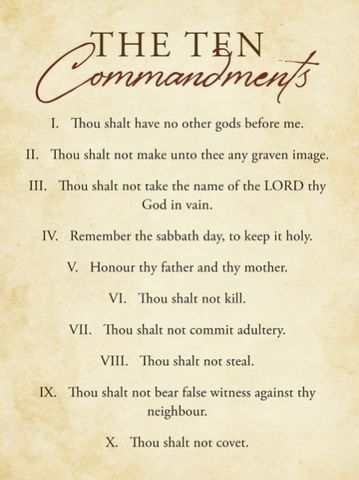
The laws in question require a poster of the Ten Commandments visibly displayed in every public school classroom across states where the measure was passed. Supporters of this bill claim that the poster and, more generally, the teachings of Christianity are important to U.S history and the ideas expressed are applicable regardless of religion. However, being taught about the historical nature and importance of a religious text and permanently displaying it in a classroom are two very different things, and the latter crosses the line between teaching and preaching. The constant presence of such a text would change it from being a document with historical significance to something one should read and obey. This bill may potentially cause students to feel excluded or invalidated in their own religious beliefs.
Furthermore, the posting of a religious text in public areas poses questions regarding what the government could do with this sort of precedent, as the separation of church and state is a concept that upholds part of the freedom that is fundamental to this nation and is outlined in the Establishment Clause of the First Amendment, which states: “Congress shall make no law respecting an establishment of religion, or prohibiting the free exercise thereof…” Thus, pressuring students to read a text belonging to a religion that is not their own is blatantly against both their freedom of religion and in violation of the First Amendment, making this law something that should not be upheld in any U.S. state, including Texas.