
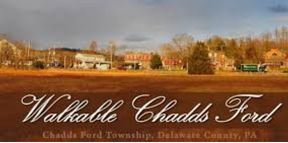
A New Walkable Chadds Ford Enriches Local Community
By Charles Nagle
Chadds Ford, the historic village perched along the banks of the Brandywine River, is taking steps to reclaim its former walkability. Once a tight knit community defined by its colonial roots, the town has been bisected by U.S. Route 1 since 1926. For nearly a century, there were no safe crosswalks, sidewalks, or pedestrian routes uniting residents and visitors across the divide. Now, after years of planning and public input, the Walkable Chadds Ford Village Design project is finally breaking ground.
First approved in 2017, the project represents a major effort to restore pedestrian access and community connectivity. The plan calls for new crosswalks, elevated boardwalks spanning Route 1, and miles of sidewalks convening the Brandywine Museum, the Chadds Ford Historical Society, and the surrounding neighborhoods. Construction began in August 2025, marking the first tangible step toward transforming Chadds Ford from a car-dependent corridor into a safe, connected, and walkable village. Local leaders say the project will not only improve safety, but also revive the small town character that defined Chadds Ford for generations. This infrastructure project is objectively fantastic. America has long been facing a growing walkability crisis where sprawling developments, car dependency, and unsafe streets have made even short walks essentially impossible, but Chadds Ford’s investment in pedestrian infrastructure shows people are finally fed up with it.
By prioritizing walkability, Chadds Ford isn’t just improving local access, it's taking a stand against a nationwide trend of disconnected, car-dominated design. The project offers a hopeful example of how small towns can lead the way toward safer, healthier, and more connected communities. If successful, the Walkable Chadds Ford project could prove that even in a car-centric America, small towns can still design for people first.