
February Celebrates the Lunar New Year
By Julia Ran
While New Year is associated with January 1, this is only true for those following the solar calendar. Lunar New Year, in contrast, celebrates the beginning of the lunar calendar. Falling somewhere between late January and mid-February each year, Lunar New Year is traditionally celebrated across Asia. It is based on the first day of the lunar calendar, which follows the phases of the moon rather than the setting of the sun.
Lunar New Year has been celebrated for as long as people followed the lunar calendar, stretching back to 4,000 years ago in ancient China. While the holiday has a similar premise in each of the countries that celebrate it, the actual celebrations vary greatly from country to country. The most well-known version is Chinese New Year, which consists of a 15-day celebration with different tasks for each day, from visiting old family to eating certain foods. To celebrate, the government mandates a seven-day holiday, but schools often release students for up to a month. Chinese New Year is the celebration that boasts the conventional image of Lunar New Year, from its fireworks and firecrackers to the red decorations. Although Chinese New Year is celebrated by billions of people across the world, many other Lunar New Years exist.
In Vietnam, the holiday is called Tet, and it focuses on family reunions, visiting temples, and eating special foods only eaten on the New Year. These include banh chung (square sticky rice cakes) and banh tet (cylindrical rice cakes). In South Korea, Lunar New Year is a three-day celebration called Seollal. People visit their hometowns and wear traditional clothing. Mongolia’s version is Tsagaan Sar, celebrated by the consumption of dairy products and a distinct focus on visiting relatives.
Due to the diaspora of cultures across the world, Lunar New Year is not limited to the continent of Asia. Millions of Asian immigrants celebrate the Lunar New Year across the world. In 2023, the United Nations declared Lunar New Year a UN holiday, a landmark recognition of Asian culture. In the United States, several states, including California and New York, consider Lunar New Year to be a public holiday. Although some states in the United States do not recognize Lunar New Year as a holiday, Asian Americans all across the country celebrate.
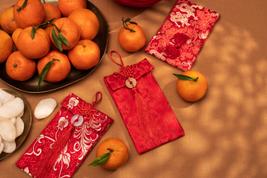
Due to the widespread belief that, just like New Year, Lunar New Year is only a one-day holiday, many Asian Americans condense their celebrations into a single day. In major cities, this celebration takes the form of parades, where dragons dance around sparking firecrackers. Within homes, the celebration varies from family to family. “We spend the entire day before Chinese New Year cleaning out the whole house, leaving bad energy behind,” said senior Lorya Xu. Senior Angelina Zhang characterized the holiday as “a time to see family and eat good food like dumplings.” Red envelopes filled with money, a classic symbol of Lunar New Year, also take on a new form in the United States. “Ordinarily, we have to bow to our relatives to receive red envelopes, but since we are so far away, we instead get red envelopes digitally,” said senior Juliana Dong.
Regardless of its form, Lunar New Year takes place across the world. Billions of people consider it the most important holiday in their culture. For all who celebrate, it is the welcoming of a new year and all the possibilities that arrive with it. For those in the United States, Lunar New Year has become an important way of maintaining Asian culture among immigrants.