
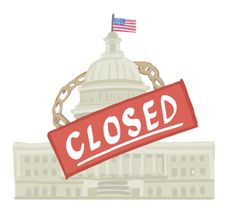
Government Shutdown Ends
By Opinions Editors
After more than 40 days, the longest federal shutdown in U.S. history is finally over. Hundreds of thousands of federal workers will finally get paid and airports and parks will reopen. However, the damage to the American education system has already been done. Suspensions of federal funding and massive disruptions resulting from extensive layoffs have choked schools off from support, forcing them to do more with less. In particular, SNAP benefits and the Title I and Individuals with Disabilities Education Act have been adversely affected.
First, the government shutdown resulted in funding suspensions that not only drained classrooms, but took food from American students’ plates. As a result of the prolonged government shutdown, up to 42 million Americans were placed at risk of losing SNAP benefits. Now, imagine being expected to go to school and learn on an empty stomach, for that was the reality for many affected students. Of the 42 million Americans who receive monthly SNAP benefits, according to Morgan Coulson of the Johns Hopkins Bloomberg School of Public Health, roughly 39 percent are children. For children in particular, food insecurity harms growth, development, and robs them of adequate nutrition. But equally important is the fact that the United States government was willing to allow these benefits to be held hostage to politics in Washington D.C. The government shutdown has set a precedent that issues on the floor in the Senate take priority over American students in their classrooms.
Next, Title I and the Individuals with Disabilities Education Act were weakened in the weeks between October 1 and November 10. These programs both provide extra support and resources to schools with low-income families and ensure that students with disabilities receive an education tailored to their needs. The shutdown threatened the delivery of funds for these programs, and layoffs within the Department of Education eliminated new funding options under these programs. Uncertainty about future funding as well as a greater number of administrative hold-ups pushed “at-risk” schools to cut vital supports. It is therefore clear that the government shutdown, in halting essential programs, left schools scrambling to obtain necessary funds, threatening the education system as a whole.
However, looking forward, schools can turn challenges into opportunities to strengthen both student learning and community support. Principal Pat Crater affirms this in saying, “As a school, we view moments like this as real-time civics lessons for our students. Our focus at Unionville High School is ensuring that our students develop the critical thinking skills and commitment to civil discourse necessary to understand complex governmental processes, evaluate information, and prepare to be the responsible, engaged citizens who ultimately solve these challenges.”