
St. Patrick’s Day: Celebration or Stereotype?
By Vishika Jasti
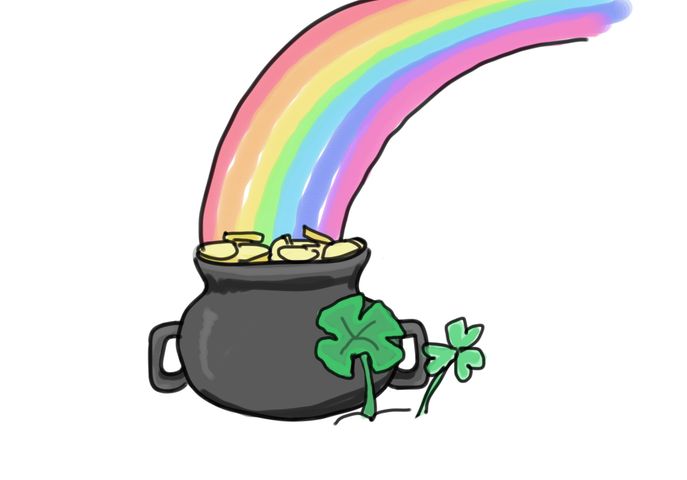
When you think about St. Patrick’s Day, what comes to your mind first? Leprechauns stealing pots of gold and escaping over rainbows? Or your school’s sinks and toilets dyed green? St. Patrick’s Day is both a religious feast day and a cultural celebration of Irish heritage that commemorates the death of Saint Patrick, the patron saint of Ireland. People can celebrate St. Patty’s by engaging in Irish dances, wearing green or shamrocks, attending parades, or making traditional food like corned beef.
However, many of the most recognizable traditions of St. Patrick’s Day focus more on exaggerated symbols rather than Irish culture itself. Leprechauns, pots of gold, and over-the-top costumes can sometimes reduce a rich culture into a few clichés. While these traditions are well-intentioned, they beg an important question: when does celebrating a culture cross the line into stereotyping it?
This question becomes more interesting when we consider how schools view cultural celebrations. For example, the high school does not host spirit days like "Hawaiian Day” out of respect for Hawaiian culture and fear of being culturally insensitive or stereotypical. If we avoid one cultural celebration because it may rely on stereotypes, then it's fair to question whether or not we should think more carefully about how we celebrate St. Patrick’s Day as well.
The line between appreciation and stereotyping depends on how a culture is represented. When celebrations rely mainly on exaggerated imagery and clichés, they turn a rich culture into a caricature, which is exactly what many modern St. Patrick’s Day celebrations do. Some also argue that when non-Irish people adopt these superficial celebrations without understanding the deeper meaning behind them, it can lead to misunderstanding of the holiday’s significance and Irish people’s history. When St. Patrick’s Day turns from an appreciation of Irish culture to an excuse to pinch your friends because they aren’t wearing green, it shows that modern celebrations often prioritize fun over respect, turning traditions into stereotypes rather than genuine cultural appreciation.